Creating a Digital Vision Board
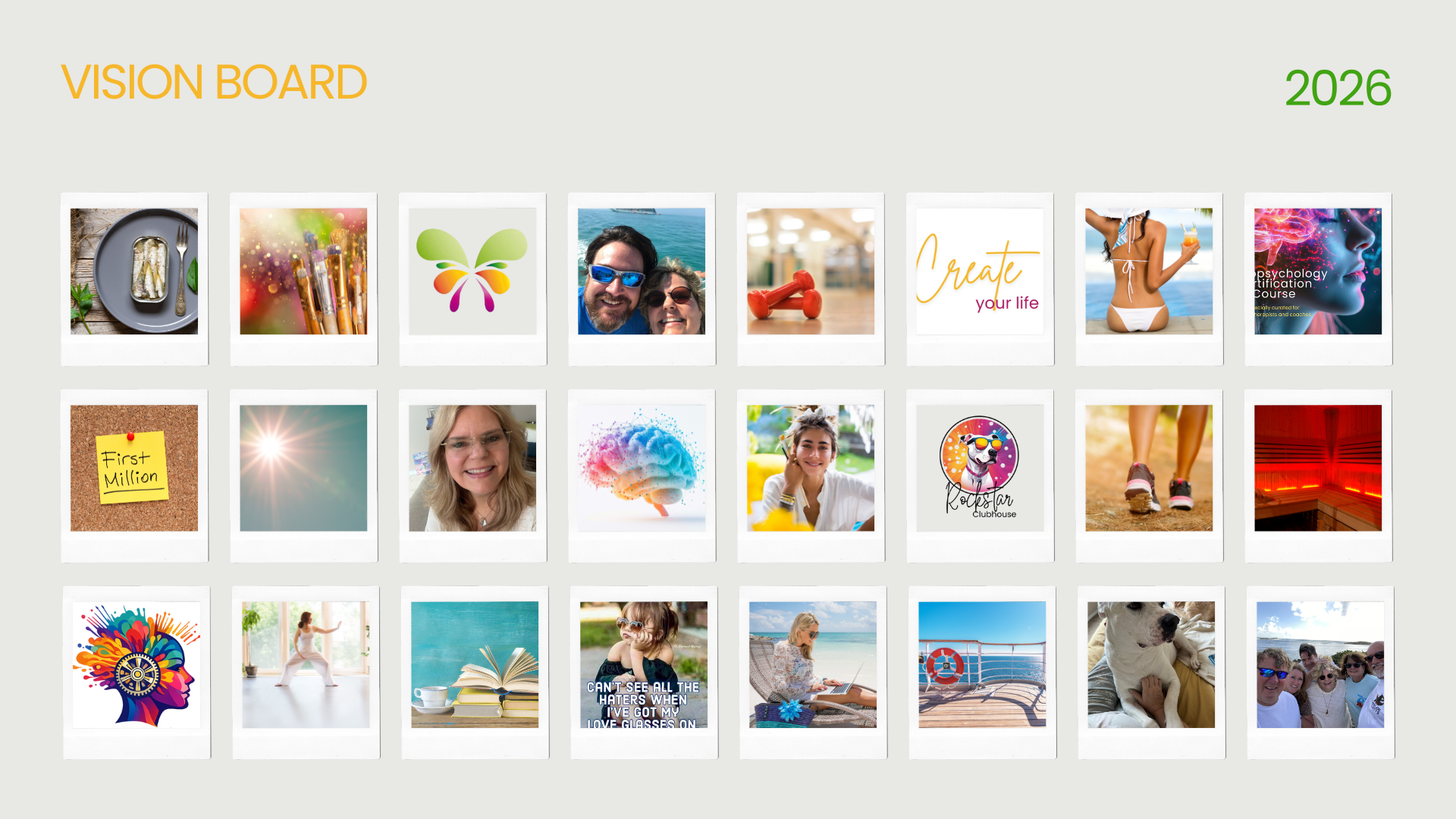
I make a vision board every January and modify it through the year. It keeps my priorities in my face every day and allows me to feel when a goal isn't quite right and needs to be revised or replaced.
Here's how to make a vision board using Canva. It's so easy, and you can use it as your computer wallpaper so you see it whenever you're on your computer so your goals stay top of mind!
1. Go to Canva and click on Create a Design.
2. In the search box, type "desktop".
3. Choose desktop wallpaper.
4. Select your design of choice.
5. Fill with pictures, which you can upload into Canva or use their stock images. You can also use their AI feature to make images: just type in a description of the picture you want and the style you want, and viola! Custom image. 😃👏
6. Save the board to your computer and set it as your desktop wallpaper.
It's that easy!
Tips:
1. Don't put a lot of thought into the specifics, just pick pictures that resonate with you for a broad goal that you have. For example, I want to get stronger this year, so I picked a picture of dumbbells. Make your vision board the desktop image for your computer so you see it every day.
2. For each picture, think about what specifically you want it to look like in your life. Consider my picture of the dumbbells. Specifically, I have a strength training workout schedule planned so I know how many reps and sets of what exercises I'll be doing on which days.
3. Ask yourself if you've tried that particular strategy before. If so, what went right and what didn't work for you. If something about it didn't work, why didn't it work? Was it your attitude? Add some mental training to your plan. Was it too physically aggressive and you kept hurting yourself? Modify it to meet your body where it's currently at. Change the strategy as appropriate based on your past experience so you're more likely to be successful this time.
4. Focus on where you are now and where you want to go. When you do that gap analysis and consider options for how you're going to get there, you'll reflect on any relevant challenges and failures you had previously and your takeaways from those experiences will help you craft a better plan this time. This way you can feel good about what you've learned from those particular failures and let them empower you to move forward more positively with a new and improved approach.
5. When you look at your vision board every day throughout the year, you will feel strengthened by the images that are working out for you and you'll feel apprehension or dissonance with those representing goals that aren't working for you. This is good; it helps you see what you really want and what goals you have that you're not really that into.
6. How can you change the goals that you're procrastinating on or that make you feel stressed out? Maybe you included them not because you really want to accomplish them but because you think someone else wants you to. Take some time to let you brain chew on the items that don't resonate with you or that aren't working for some reason, and don't let yourself get frustrated about it. You have some options to help you understand what's at the heart of the issue: the free resources in my app, my Reconstructing Reality Workbook (available here), and/or sessions with me or a member of my team. It's usually pretty easy to find the cause of the difficulty and do something about it - you just might need a little help.
Enjoy the feeling of dumping your failures by the roadside, dusting off your hands, and moving forward in a variety of ways with more optimism and empowerment. 💫